
8 Essential Hardware Integrations for a High-Performance Trading Desk Setup

8 Essential Hardware Integrations for a High-Performance Trading Desk Setup
In the world of financial trading, speed, reliability, and uninterrupted access to information are critical. While trading software and algorithms often receive the spotlight, the hardware infrastructure behind a trading desk is equally important. A high-performance trading desk relies on specialized hardware integrations that enable traders to monitor markets, execute orders instantly, and maintain operational resilience.
Below are 8 essential hardware integrations required to build a powerful and efficient trading desk environment.
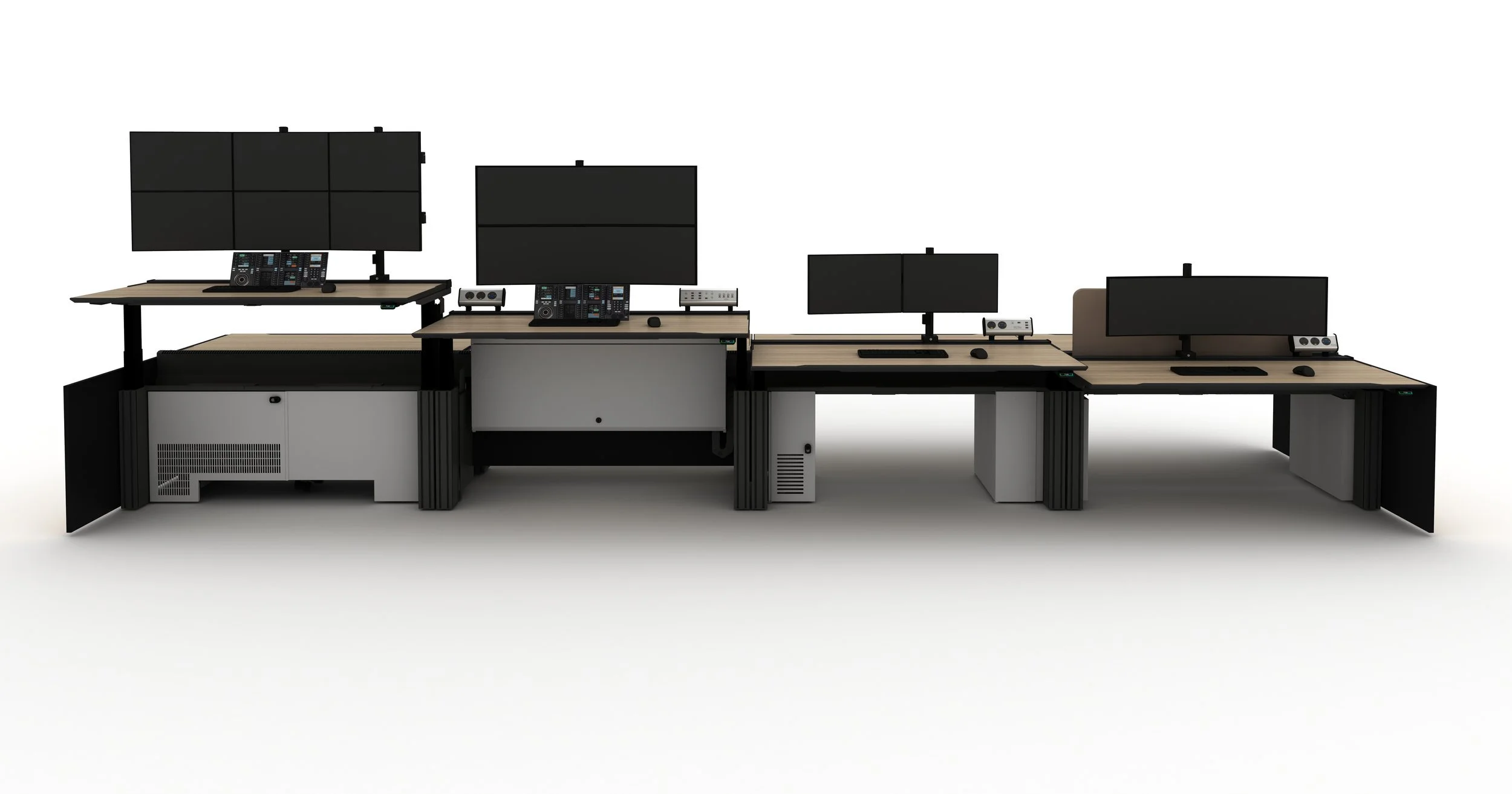
1. Multi-Monitor Daisy Chaining
Traders rely on multi-monitor setups to track multiple markets, news feeds, charts, and order books simultaneously.
Some high specification monitors are now incorporating Monitor daisy chaining technology. This is a way to connect multiple monitors using a single cable from your computer. This allows for minimal cabling from monitor to PC and graphics cards with less ports.
Although currently there are two methods, (USB-C can be used with latop connectivity) DisplayPort is currently the primary standard that supports monitor daisy-chaining using a feature called MST (Multi-Stream Transport).
How it works
Computer → Monitor 1 via DisplayPort
Monitor 1 → Monitor 2 via DisplayPort Out
Monitor 2 → Monitor 3 (if it also has DP-Out)
Requirements
All Monitors must have DisplayPort Out (not just DP-In)
DisplayPort 1.2 or higher specification
MST must be enabled in the monitor settings
Supports multiple monitors (depending on resolution & GPU)
3. High-Performance Trading Workstation PCs
At the core of every trading desk is a high-performance workstation designed to handle multiple trading platforms, analytics tools, and real-time market data streams simultaneously.
Key specifications often include:
Multi-core CPUs with high clock speeds
Large RAM capacity (32GB–128GB)
High-speed NVMe SSD storage
Professional-grade GPUs for multi-display support

These workstations ensure traders experience minimal latency while running complex trading applications.
3. Low-Latency Network Switches
High-speed enterprise network switches are essential for minimizing latency between trading systems, market data providers, and exchanges.
Key capabilities include:
10GbE or 25GbE connectivity
Low packet processing latency
Quality of Service (QoS) prioritization
High throughput capacity
These switches ensure rapid transmission of trading orders and market data across the trading infrastructure.

4. PC storage
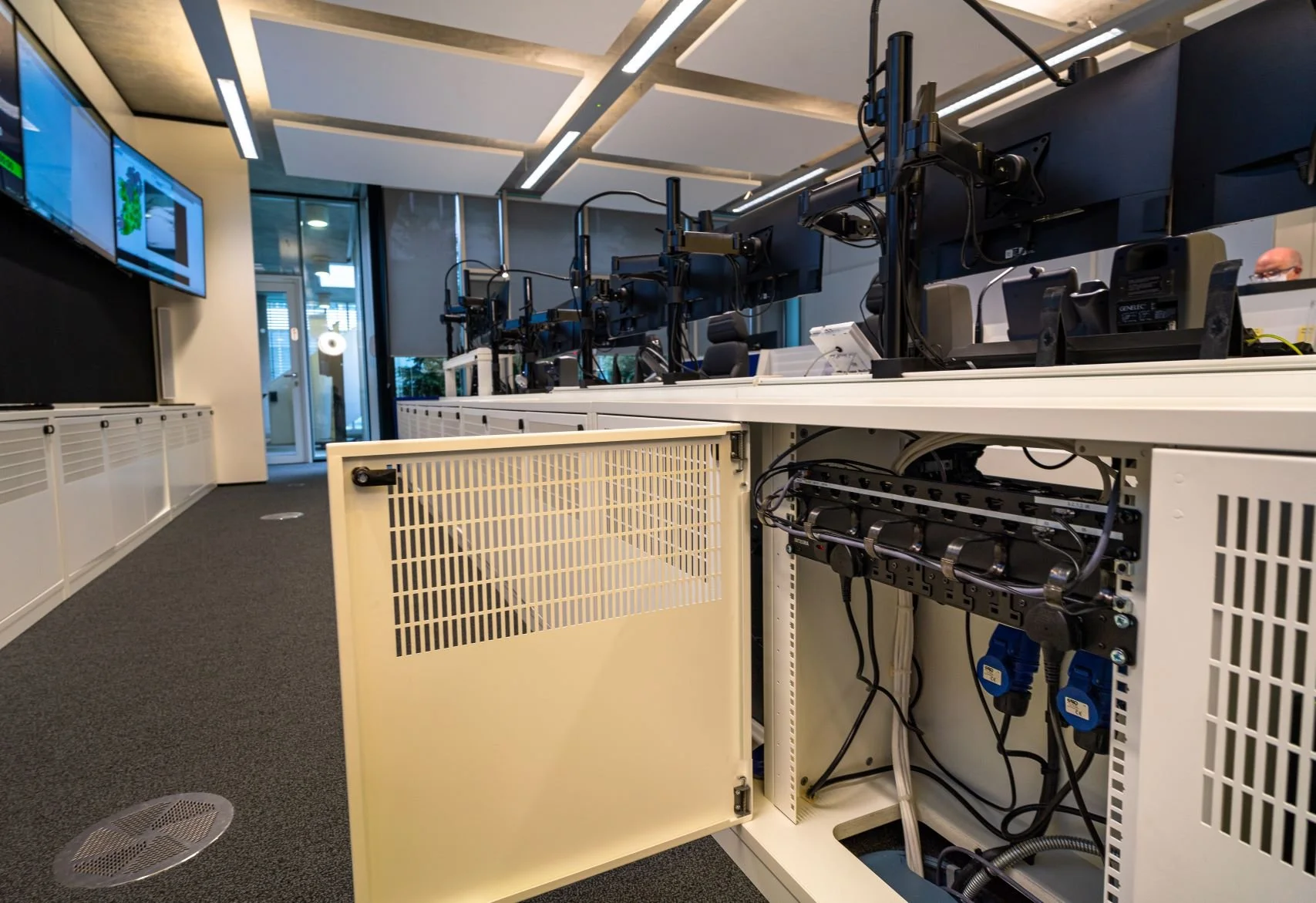
Even with the rise of cloud computing, local PC storage is still important due to high specification CPUs and GPUs needed for trading. A well-integrated trading desk will accommodate and protect your IT equipment. Built-in cabinets can house PCs conveniently underneath the desktop. This keeps them in easy reach while maintaining a clutter-free environment.
You can also lock the PC storage cabinet, protecting valuable IT hardware from unauthorised access. If you have specific requirements customised desk IT storage cabinets can be designed to fit your workspace.
Dynamic PC enclosures are very useful if you have a height-adjustable desk. As the desktop rises and falls, the PC moves with it, eliminating the need for long cables and reducing strain on connections.
5. Voice Trading Turrets and Communication Hardware
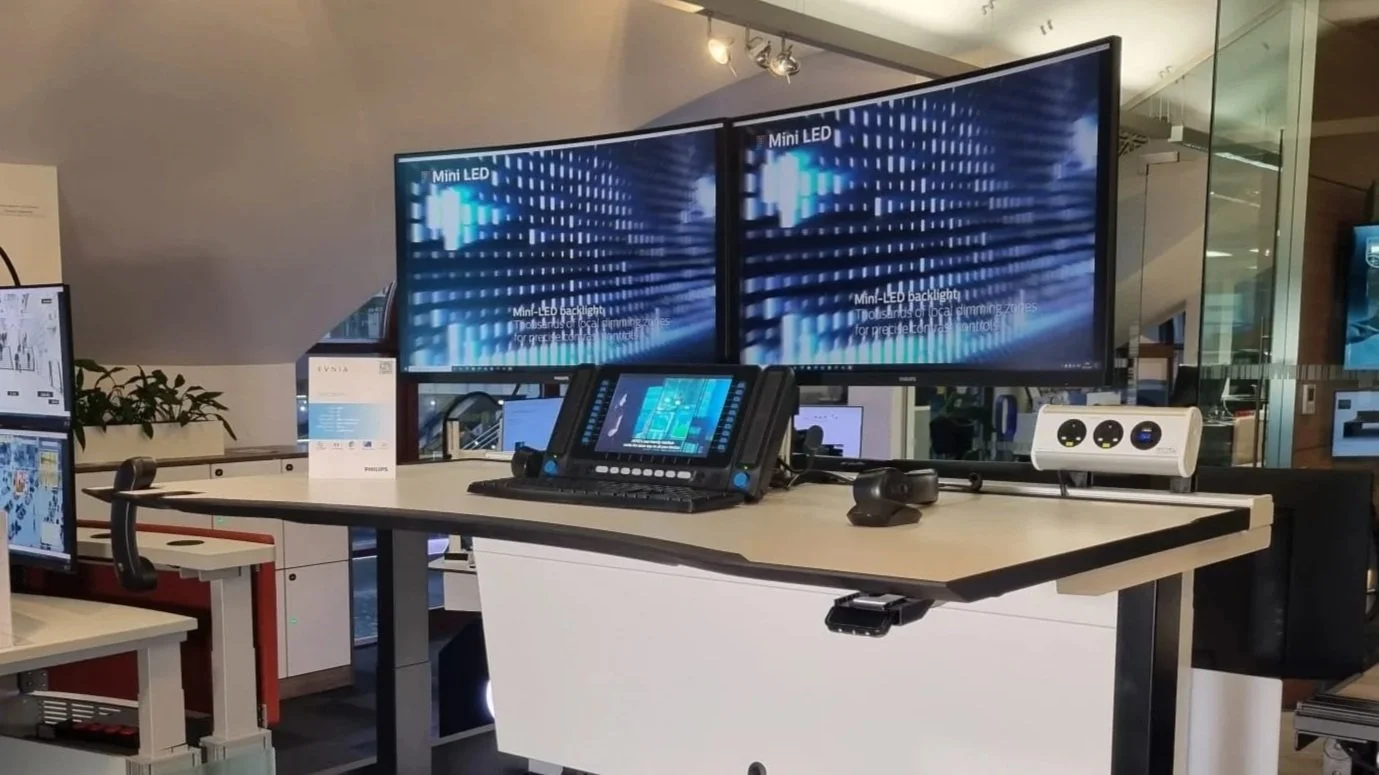
Communication is still a crucial part of many trading operations. Trading turrets and voice communication hardware allow traders to interact quickly with brokers, clients, and internal teams.
Key features include:
Multi-line communication channels
Instant call routing
Compliance recording
Integration with trading platforms
These systems remain standard equipment on many institutional trading floors.

6. Monitor arms
Traders use multiple screens. If you want to increase the number of screens you use, extra monitor arms can be installed. An extension can be added to your monitor post, allowing the screens to be mounted securely. You can move from two or three monitors to four, six, or more, depending on your role. The result is a more efficient workspace, providing traders with immediate access to the data and tools they need without compromising ergonomics or stability.

7. Power Redundancy and UPS Systems
Power interruptions can disrupt trading operations and cause financial losses. Uninterruptible Power Supply (UPS) systems and redundant power infrastructure protect trading desks from downtime.
Key components include:
UPS battery systems
Dual power supplies for critical hardware
Power distribution units (PDUs)
Backup generators
This hardware ensures trading systems remain operational during power disturbances.
UPS batteries can either be located in the server room or individually within each trading desk.
9. Heat Management
In a work environment with high specification IT equipment, managing heat is a critical concern. Smart ventilation features can ensure temperatures stay optimal, even during long shifts.
Below desk PC cabinets should be designed to efficiently expel hot air. The PCs internal fan creates a lower pressure in the void which draws in air through the vented cabinet door. This air then cools the CPU(s) and is expelled from a flue at the back of the PC. Effective routing of the heat prevents it from being radiated out into the user kneewell.
To assist the natural convection process 12Vdc fans can be added to the vented doors, or below the central desk flue. The door fans lower the operating temperature of CPUs (being located in front of the PC inlet), and in turn the temperature of air ejected from the desk.

Conclusion
A high-performance trading desk depends on more than advanced algorithms and trading strategies. The underlying IT hardware infrastructure plays a crucial role in ensuring speed, reliability, and resilience.
By integrating powerful workstations, low-latency networking hardware, specialized acceleration technologies, and robust backup systems, trading firms can create an environment where traders operate efficiently and respond to market changes in real time.
Organizations that invest in the right hardware integrations build trading desks capable of handling high data volumes, executing trades faster, and maintaining continuous operations in today’s competitive financial markets.
Looking to upgrade your trading floor? Technology Desking have over 30 years of experience in manufacturing trading furniture. Our desks have up to10-year warranties, and we offer ongoing customer support. We work with you to customise your trading desks to your unique requirements. Ergonomic design and efficient technology management are our core principles. Take a look at our products here