What Are Control Room Consoles Made Of? A Guide to Materials and Performance

Did you know that control room consoles are highly engineered systems? They’re built from a combination of structural, surface, and finishing materials. Each material plays a role in ensuring the console performs flawlessly over years of continuous use. Below, we take a look at the materials most commonly used in control room consoles and why they matter.

Steel
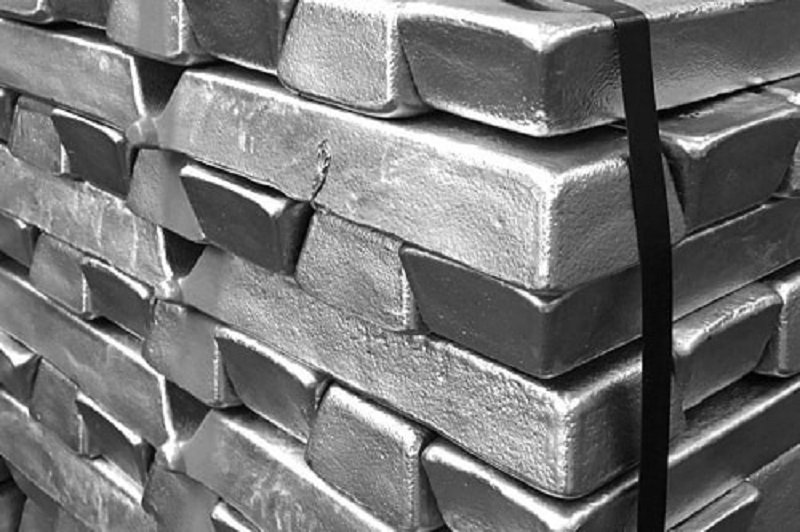
Steel is an essential component in a quality control room console. A steel supporting frame provides the strength and durability required for long-term, 24/7 use.
Features and benefits:
Steel enhances the console’s load capacity, allowing it to withstand the weight of monitors and other equipment.
It has a long service life and doesn’t degrade as quickly as many other materials.
Steel is sustainable as it can be recycled indefinitely without losing its properties.
Powder coated steel is the best choice for control room consoles. Powder coating is a protective finish that resists chips and scratches. It also protects against moisture.
Aluminium
Aluminium is often used alongside steel in control room consoles. It is particularly used for desk components with a continuous fixed cross-section resulting in long components such as monitor rails or cross beams.
Features and benefits:
Aluminium is easier to mould than steel, so it’s used for components manufactured by extrusion where the aluminium is pushed through a die to create a precisely detailed shape. These extruded components are commonly used for monitor mounts, supporting frameworks, and panel frames.
It offers an excellent strength-to-weight ratio. Aluminium components remain strong and stable without adding unnecessary weight.
It resists wear, corrosion and fatigue over many years of continuous use.

MDF
Most control room console desktops are constructed with an MDF (medium-density fibreboard) core. MDF is made of compressed wood fibres bonded with resin
Features and benefits:
Unlike solid wood, MDF isn’t susceptible to expanding or contracting due to weather conditions. It has a flat, smooth surface, making it ideal for attaching a laminate covering.
Its dense structure makes it more durable than chipboard. If the desk needs to be long lasting or is subject to intense use, e.g. in a 24-hour environment, this is the material of choice.
End and back panels can also be constructed from MDF.
MFMDF
MFMDF is a desktop material made by bonding a melamine surface directly to a stable MDF core during manufacture. MFMDF stands for Melamine Faced Medium-Density Fibreboard.
Features and benefits:
MFMDF is a cost effective solution as the desktop is constructed in the factory rather than when the console is being assembled.
The melamine surface is hard wearing and easy to clean, ideal for control room environments.
Laminate
Laminate is a highly durable and adaptable material for control room console surfaces. To create a desktop, a very thin layer of laminate is applied to an MDF or chipboard core.
Features and benefits:
It is very durable and ideal for 24/7 use. The surface is dent and scratch resistant.
The hard wearing surface makes it easy to clean and maintain for use in shared desk spaces.
Laminate desktops come in a wide range of finishes with different colours and texture options available.
It resists moisture and staining, so the occasional tea spill isn’t a problem.
Solid core laminate
Solid core laminate is the highest strength desktop material. It differs from regular laminate desktops in that there is no MDF centre. It’s solid laminate right the way through.
Features and benefits:
Being the most durable of all desktop materials, it will last the longest, even with 24/7 use
It’s resistant to scratches and chips
There is no need to edge it with another material
It can be made to be very thin (approx 12-13mm) and very strong, but also light
It offers an attractive finish with a wide choice of colours and textures.

Polyurethane
Polyurethane is used to create edging around the desktop. Its versatility allows designers to create a wide variety of desktop edging shapes.
Features and benefits:
Operators often rest their forearms or wrists on the desk edge for long periods. Polyurethane edging reduces pressure points and sharp corners, improving comfort during extended shifts.
Desk edges are more subject to knocks and wear over time. Polyurethane protects them from this.
The desktop design can incorporate rear and side polyurethane spillage lips. These stop drinks from dripping into electronics below the desktop
There are a variety of different colour options
Polyurethane can be used to create moulded handset holders and below desk finger holds that allow you to pull yourself to your desk while seated
Glass and Perspex
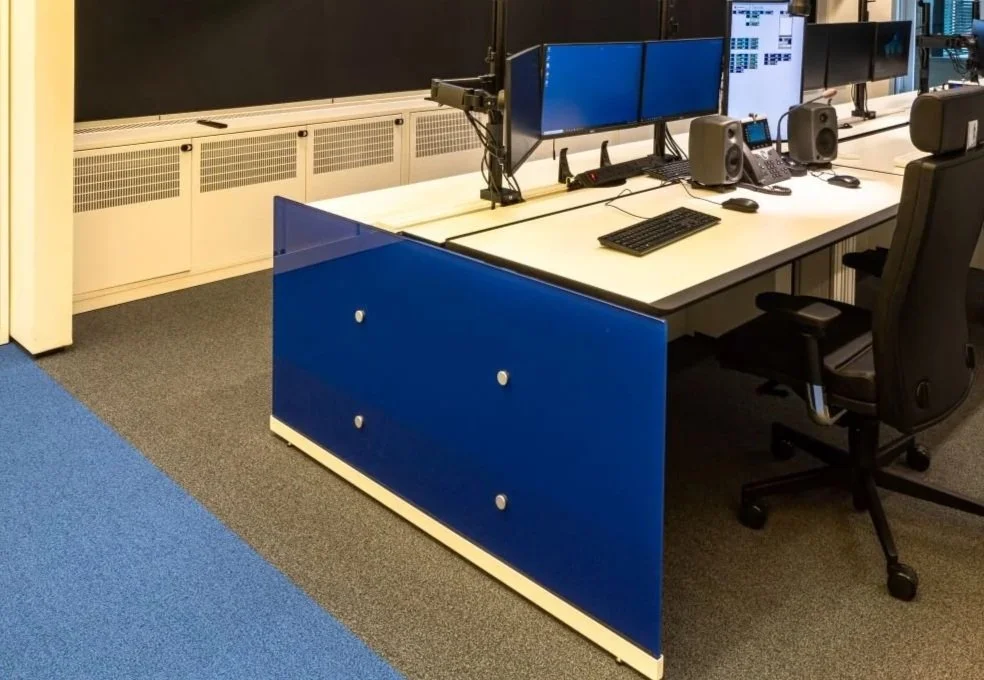
Control room console designs can include glass or perspex features, especially as decorative end panels or screens between desks. Toughened safety glass is used to ensure strength and compliance with safety standards.
Features and benefits:
Designers can customise glass console end panels with company colours, graphics, or logos. These allow organisations to reinforce their brand identity while maintaining a professional look.
Perspex screens can also be fitted between consoles. Screens became popular during the pandemic to prevent the spread of viruses, but they also help create some privacy and better acoustics for focused work.
Perspex can also be incorporated into metal end panels and back panels to create colour adjustable LED lighting.

Looking to upgrade your control room? Our experts can develop a custom furniture solution that’s tailored to your needs. Get in touch to find out more.