Designing Control Room Consoles for Emergency Services
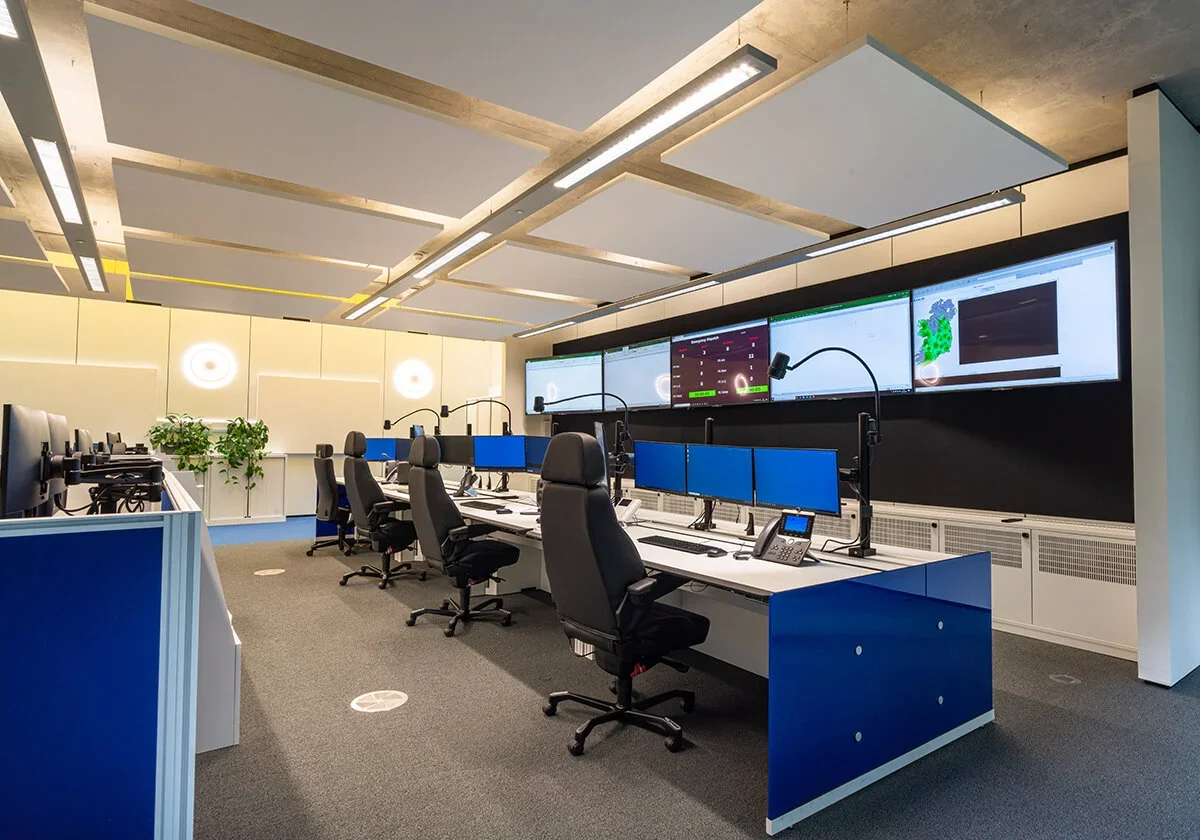
Emergency service control rooms are among the most demanding work environments. They operate 24 hours a day, 365 days a year, supporting critical decisions where every second matters. The furniture within these spaces isn’t just functional, it forms part of the operational infrastructure.
With over 34 years’ experience in manufacturing and installing bespoke control room consoles, we’ve gained an understanding of the requirements of these environments. The right console design can improve operator comfort and adapt to evolving technology. In this article, we explore the key considerations when specifying consoles for mission-critical workplaces.
Supporting Long, High-Stress Shifts
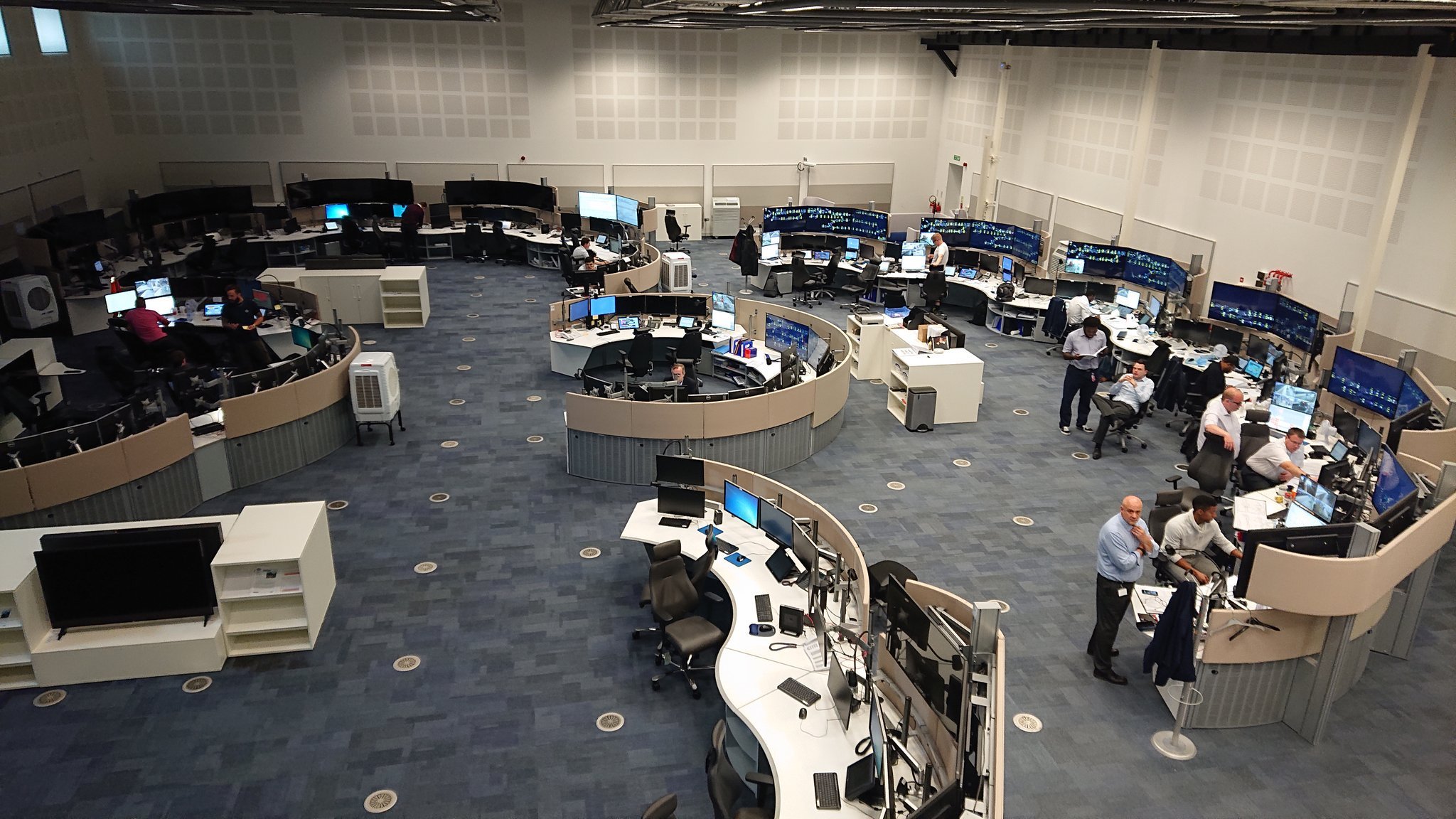
Emergency control rooms operate 24/7. Operators often work long shifts while managing multiple live systems simultaneously. Comfort is not a luxury – it directly affects concentration, accuracy, and response time.
A well-designed control room console has plenty of ergonomic features to keep operators alert and help prevent fatigue. Because consoles are shared across rotating shifts in a 24-hour control room, adaptable design is crucial.
Sit-stand desks let you adjust your desktop to your preferred height level. You can also alternate between sitting and standing throughout your shift. In addition to providing many physical health benefits, this helps prevent fatigue and keeps you focused.
It’s also important to be able to adjust your monitor to a comfortable position.A quality monitor will have built-in flexibility, allowing you to finely adjust the monitor height and angle.
Emergency call handlers and dispatch operators often sit for 8–12 hours at a time. An ergonomic chair designed for 24-7 use will offer them better support than an ordinary office chair. This type of chair has enhanced back support and allows the seat height and angle to be adjusted for any body type. It has better padding and is more durable than regular office chairs.
Managing Multiple Screens and Systems
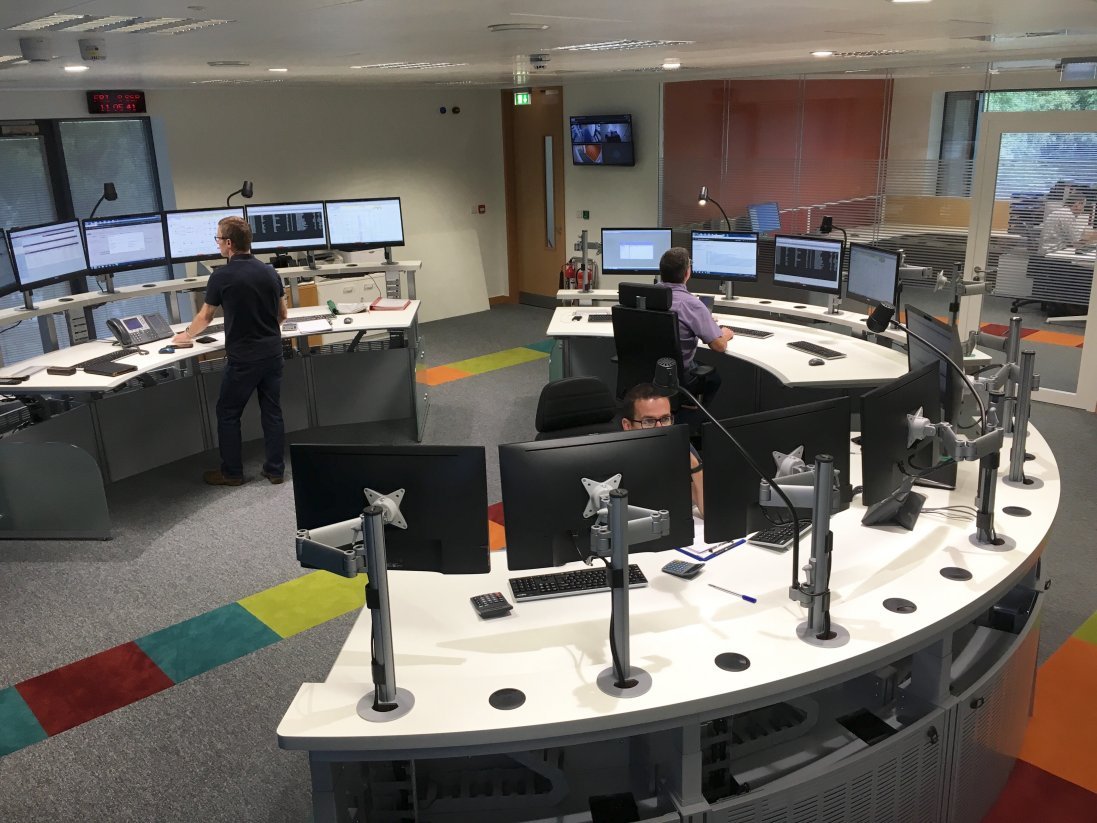
Emergency service operators often use multiple screens, so robust monitor support is essential. Post mounted monitor arms are designed for this and are the best choice for an emergency services control room. They are highly adjustable, allowing you to easily change the height and angle to your preference. This helps you create a comfortable working posture, reducing back and eye strain. It’s also easy to add and remove screens with this type of arm, so you can change your monitor configuration.

With multiple monitors and other equipment in constant use, effective cable management is essential. Improperly routed cables can lead to distracting clutter on the desk. Also, an accidental disconnection could interrupt communications at a critical moment. Cable trays are the best way to avoid this happening. These keep the cables neatly contained beneath the desktop and enable them to move up and down with a height adjustable desk.

A quality monitor arm will also allow cables to be routed through it. Good cable management makes upgrades or equipment changes simpler in situations where downtime is not an option.

SmartArm post mounted monitor arm
Built for 24/7 Performance
Emergency service control room consoles are in use 24/7. Because of this, they need to be hard-wearing and built to withstand constant operation. This is achieved by constructing them with durable materials, strong steel frames and hard wearing finishes. Consoles have to be built to a high standard to withstand round the clock use. Your console should last 10 years or more with serviceable parts that can be repaired or upgraded throughout its lifetime.
Why Bespoke Matters in Emergency Environments
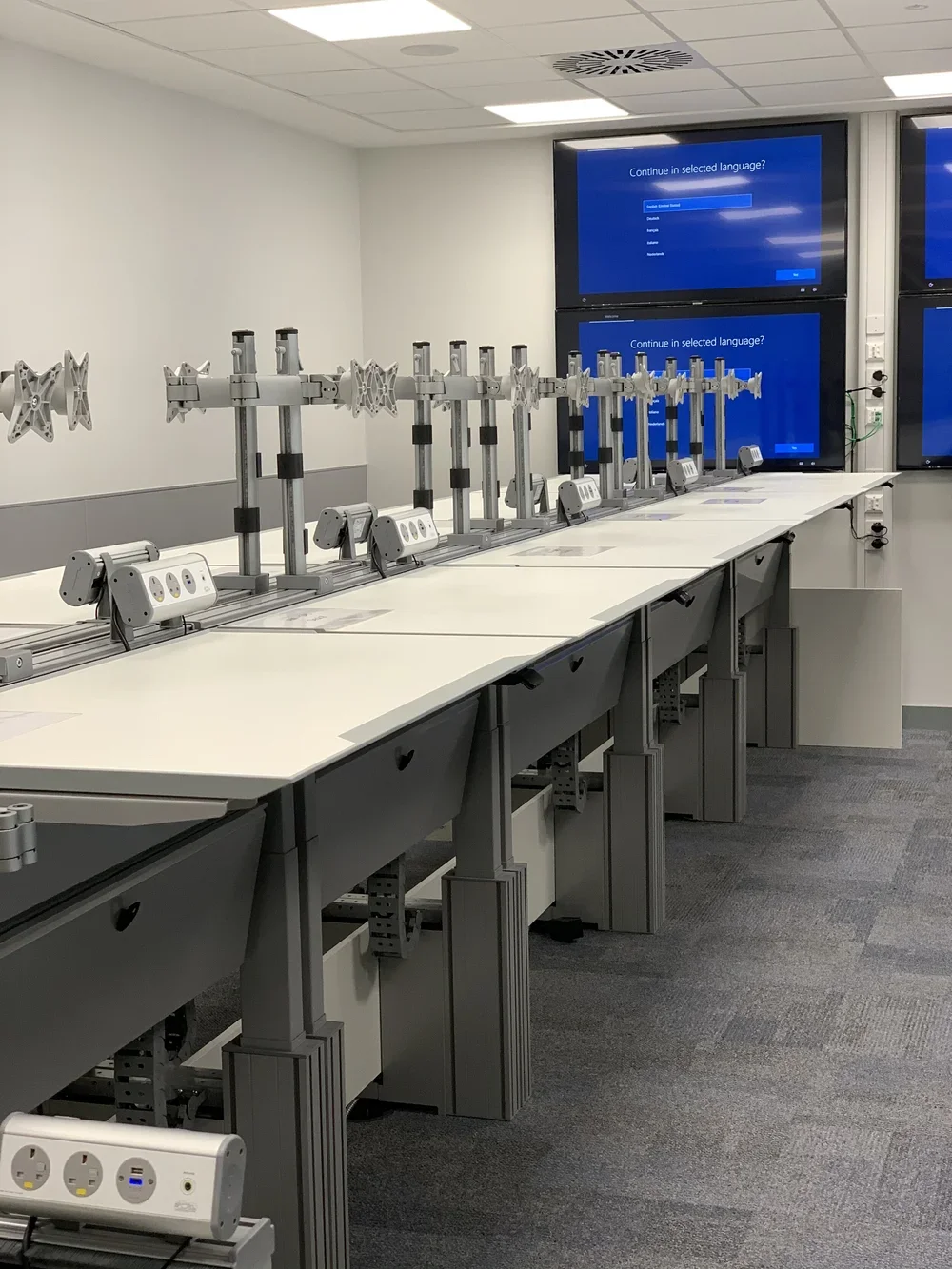
Emergency control rooms aren’t standard office spaces and shouldn’t be furnished like they are. Each one has different needs regarding the technology used and the working environment. Bespoke design allows the console to be built around the exact equipment operators rely on daily.

It’s important to consider whether you need a single or dual surface console. A dual surface custom control room console has one surface serving as the primary workspace for users and a second surface that supports monitors. Both desktops are usually height adjustable, which is excellent for ergonomics, as users can set their preferred height on each surface. A separate, independently adjustable monitor surface provides greater height adjustment flexibility.
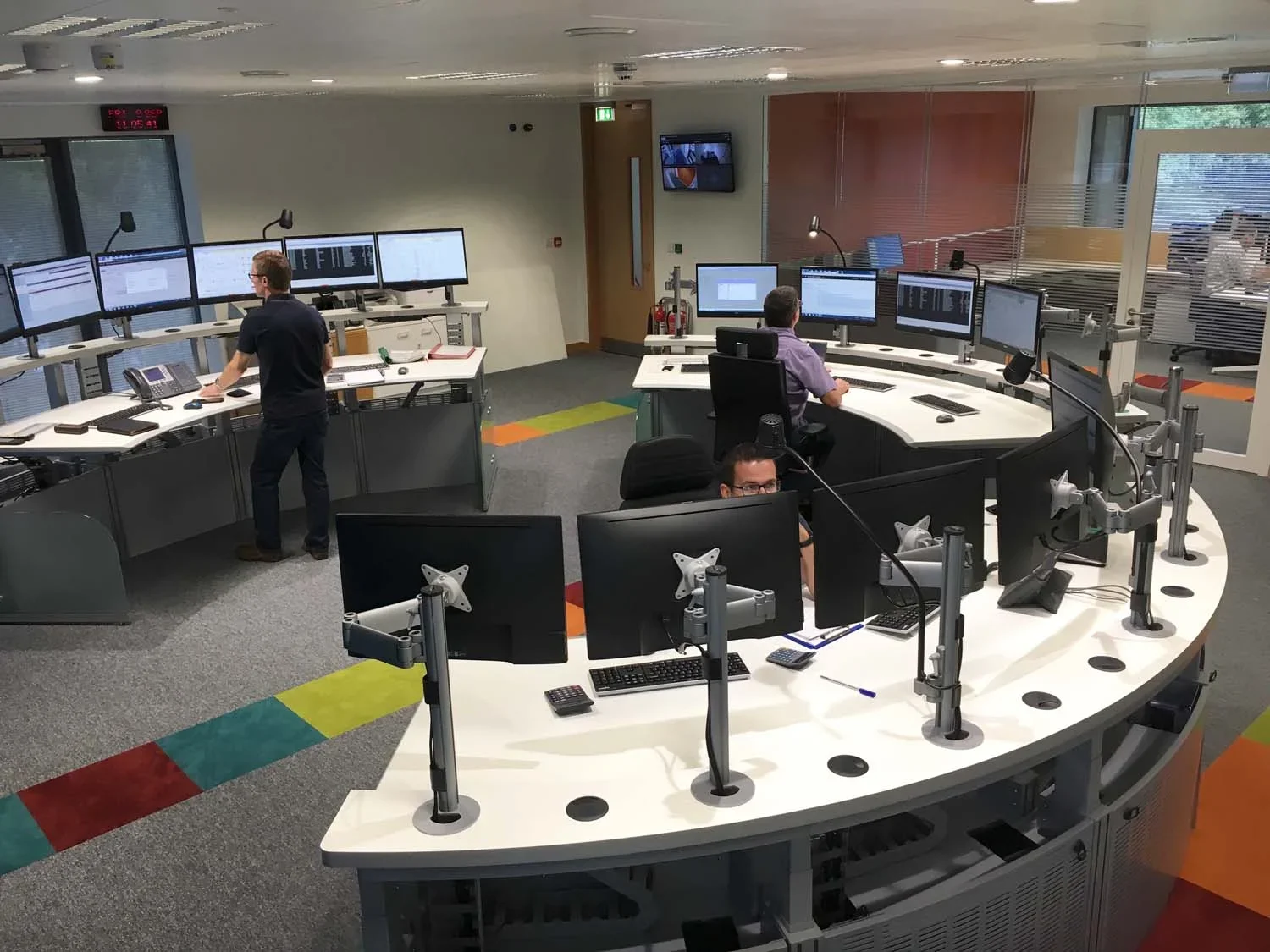
In an emergency control room, the number and size of monitors operators use can vary. Consoles can be designed to accommodate this, with the desktop depth and surface space adjusted to fit the operator’s monitor requirements.
Another consideration is whether the control room operators are using PCs or remote processing. If they’re using PCs, the console will need to be large enough to accommodate them withing the desk frame below the desktop with allowances for heat management.

Cable management and desktop power units will also need to be bespoke to cater for each operator’s varying tech and equipment needs.
If you’re planning a new control room or upgrading an existing one, we can put our three decades of expertise to work for you. Get in touch to find out more about console solutions tailored for your needs.